Life sciences is the study of living organisms, including plants, animals, and microorganisms. It covers topics like cell biology, reproduction, growth, nutrition, respiration, and classification of living things. Life sciences help us understand how organisms function, interact, and adapt to their environment. Learning about life sciences develops our observation and analytical skills. One of the best ways to do so it solving the well-designed Life Science Quiz for Grade 6. It tests your knowledge about biodiversity and the need to protect all forms of life. Try these 10 questions to see how well you understand the basics of life sciences.
Some animals are able to survive in extremely cold climates by conserving heat. Which of the following adaptations is LEAST effective in helping animals survive in cold environments?
Answer: (b) Large ears with thin skin
Identify the INCORRECT statement about the response of living organisms to stimuli.
Answer: (c) Only animals respond to stimuli, not plants.
Match the protection strategy to its effectiveness in providing protection from predators. Adaptation Example A. Camouflage 1. A gazelle B. Speed and agility to escape 2. A poison dart frog C. Bright colours to confuse the predator 3. A leaf-tailed gecko
Answer: (c) A - 3, B - 1, C - 2
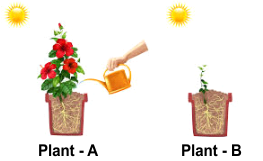
A researcher observed two different plants: Plant A, which grows quickly and produces large flowers, and Plant B, which grows slowly but has smaller flowers. Both plants receive the same amount of sunlight, water, and nutrients. Based on this information, which of the following conclusions can be made about the growth and reproduction of these plants?
Answer: (c) Plant A likely has a faster rate of cell division and growth than Plant B.
Consider the reproductive strategies of two animals: a frog (which lays hundreds of eggs in a pond) and a lion (which has a few cubs at a time). Which of the following is most likely true about these two animals?
Answer: (b) The frog’s reproductive strategy increases the likelihood of some offspring surviving, while the lion’s strategy provides better care for each offspring.
The teacher asked four students to explain the characteristics of living organisms. Which student(s) gave the correct response? Mia - All living organisms respond to stimuli in their environment. Jack - All living organisms do not need food to grow. Ava - All living organisms can reproduce. Noah - All living organisms grow and change over time at the same rate.
Answer: (d) Both Mia and Ava
Penguins are birds that live in cold climates. Which of the following adaptations help penguins stay warm and swim efficiently? A. Thick layer of blubber under the skin for insulation B. Streamlined bodies for reducing water resistance C. Webbed feet for swimming and walking
Answer: (d) A, B, and C
Analyse the following statements about the life cycle of a chicken. Identify the true statement. Statement 1: The chick hatches from an egg and immediately looks like an adult. Statement 2: The egg incubates for about 21 days before the chick hatches. Statement 3: The chick undergoes metamorphosis like a butterfly.
Answer: (b) Statement 2 is true.
Sarah is trying to grow a garden with a variety of plants. She has two different types of flowers: one that reproduces by seeds and another that reproduces through cloning (asexual reproduction). She noticed that the plant that reproduces through cloning grows faster but doesn’t create any new varieties of itself, while the one that reproduces by seeds produces new, different types of flowers. Why do seed-reproducing plants produce new varieties, but cloning plants do not?
Answer: (a) Seed-reproducing plants mix genetic material from two parent plants, while cloning plants only copy their own genetic material.
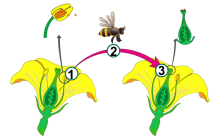
Consider the passage given below and answer the following question: The Wonders of Plant Reproduction Plants have developed fascinating methods to ensure their survival and spread through sexual and asexual reproduction, each enabling adaptation to their environments. Sexual reproduction involves the fusion of male and female reproductive cells, usually through flowers. Pollen (male gamete) travels to the ovule (female gamete) via wind, insects, or animals. Fertilisation leads to the formation of seeds containing genetic material from both parents, ensuring genetic variation. As seeds germinate, they grow into new plants, continuing the cycle. Asexual reproduction requires only one parent and produces genetically identical offspring. Methods include vegetative propagation, where parts like roots, stems, or leaves develop into new plants. Each method offers unique advantages, helping plants survive, maintain ecosystem balance, and contribute to biodiversity. Scientists study these processes to better understand plant survival strategies and their role in ecosystems. Why is pollination critical for the reproductive success of flowering plants?
Answer: (a) It promotes genetic variation, leading to more resilient plant populations.
| Topic | Quiz |
|---|---|
| Introduction to Cell | Quiz on Introduction to Cell |
| Electrical Circuits and Phenomena | Quiz on Electrical Circuits and Phenomena |
| Elements, Compounds and Mixtures | Quiz on Elements, Compounds and Mixtures |
| Environmental Studies | Quiz on Environmental Studies |
| Human Body, Health and Hygiene | Quiz on Human Body, Health and Hygiene |
| Kinematics and Distance Measurement | Quiz on Kinematics and Distance Measurement |
| Life Sciences | Quiz on Life Sciences |
| Magnetic Interactions and Applications | Quiz on Magnetic Interactions and Applications |
| Optics and Light Phenomena | Quiz on Optics and Light Phenomena |
| Transformation of Matter | Quiz on Transformation of Matter |