
Sound is produced when objects vibrate. It travels through air, water, and solids in the form of waves. We hear sounds when vibrations reach our ears. Sound can be pleasant, like music, or unpleasant, like noise. Noise pollution is harmful to our health and the environment. Learning about sound and noise helps us understand how we communicate and hear. Sound and Noise Quiz Grade 5 is designed to test your knowledge about the pitch, loudness, and quality of sound, and how to reduce noise pollution. Take this quiz with 10 questions to evaluate your understanding of sound and noise.
Why do astronauts in space use radios to communicate with each other even if they are close?
Answer: (a) Sound does not travel in the vacuum of space.
Consider how sound waves propagate through different mediums. Which of the following statements accurately describes the behaviour of sound in water versus air?
Answer: (d) Sound travels faster in water than in air because water helps sound waves move more easily.
During a science project, Liam and Mia are testing how different surfaces affect sound. They clap their hands in various locations. Which scenario would likely result in the greatest decrease in sound intensity?
Answer: (a) Clapping hands in a carpeted room with thick curtains
Ben blows up a party popper, and it makes a loud popping sound. What happens to the air molecules inside the popper when it goes off?
Answer: (d) They spread out rapidly.
While playing in the park, Daniel realises that the sounds of birds singing become harder to hear when he puts on his headphones. What is the PRIMARY reason for this decrease in sound clarity?

Answer: (b) The headphones absorb sound wave.
Maya ties a string to a metal spoon and hangs it from a table. When she gently taps the spoon with another metal spoon, it vibrates slightly and makes a quiet tinkling sound. She then dips the hanging spoon into a cup of water. What will likely happen to the sound when she taps the spoon again?
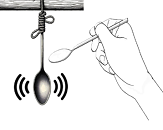
Answer: (d) The sound will be quieter and less vibrant.
A bell is rung in four different mediums, and the sound characteristics are observed. The results are displayed in the table below. Based on the observed sound characteristics, which of the following statements is true? Medium Sound Characteristics Metal Loud and clear. Water Somewhat muffled. Air Faint. Vacuum No sound detected.
Answer: (a) Sound travels fastest through metal, making it the most effective medium.
Consider the passage given below and answer the following question. The Sound of Silence: Reducing Noise Pollution Have you ever noticed how loud noises can disrupt your focus or make it hard to relax? Noise pollution is a growing problem in our world, often caused by traffic, construction, and loud music. This unwanted sound can have harmful effects on both our health and the environment. To combat this issue, many people and communities are taking steps to reduce noise pollution. One effective way to lessen noise is through landscaping. Planting trees and shrubs around homes and busy areas can act as natural sound barriers, absorbing sound waves and providing a peaceful atmosphere. Additionally, installing soundproof materials in buildings, such as thick windows and insulation, helps block outside noise from entering our living and working spaces. These solutions not only reduce noise but also enhance the beauty of our surroundings. Another strategy involves promoting quieter transportation options. Encouraging the use of bicycles, walking, and public transit can significantly decrease the noise generated by cars and trucks. Cities can also invest in quieter road surfaces and promote electric vehicles, which produce less noise than traditional gasoline-powered cars. By implementing these measures, we can create a more serene environment for everyone. If a community decides to plant trees and shrubs to reduce noise pollution, which of the following would be the most important factor to consider in selecting the types of plants?
Answer: (c) The plants should have dense foliage to effectively absorb sound waves.
Consider the passage given below and answer the following question. The Sound of Silence: Reducing Noise Pollution Have you ever noticed how loud noises can disrupt your focus or make it hard to relax? Noise pollution is a growing problem in our world, often caused by traffic, construction, and loud music. This unwanted sound can have harmful effects on both our health and the environment. To combat this issue, many people and communities are taking steps to reduce noise pollution. One effective way to lessen noise is through landscaping. Planting trees and shrubs around homes and busy areas can act as natural sound barriers, absorbing sound waves and providing a peaceful atmosphere. Additionally, installing soundproof materials in buildings, such as thick windows and insulation, helps block outside noise from entering our living and working spaces. These solutions not only reduce noise but also enhance the beauty of our surroundings. Another strategy involves promoting quieter transportation options. Encouraging the use of bicycles, walking, and public transit can significantly decrease the noise generated by cars and trucks. Cities can also invest in quieter road surfaces and promote electric vehicles, which produce less noise than traditional gasoline-powered cars. By implementing these measures, we can create a more serene environment for everyone. The passage discusses various strategies to reduce noise pollution. Based on the information, which strategy would likely have the most significant impact on reducing noise in urban areas?
Answer: (b) Encouraging public transportation and electric vehicles to lower traffic noise.
Consider the passage given below and answer the following question. The Symphony of Sounds Sounds are all around us, and they can be grouped into different types based on how they make us feel. Pleasant sounds, like the chirping of birds or the gentle rustling of leaves, can bring joy and calmness to our lives. These sounds often help us relax, reduce stress, and create a positive atmosphere. They can enhance our experiences, whether we're enjoying nature or listening to our favorited music. On the other hand, unpleasant sounds, such as loud construction noise or a crying baby, can be quite disruptive. These sounds can make it difficult to concentrate, increase stress levels, and even lead to discomfort or anxiety. While unpleasant sounds are often unavoidable in our daily lives, they can have negative effects on our health and well-being if we’re exposed to them for long periods. Warning sounds play a crucial role in keeping us safe. Alarms, sirens, and beeping sounds alert us to potential dangers, helping us react quickly to emergencies. For example, the sound of a smoke alarm tells us to evacuate a building. However, these sounds can also be annoying and cause panic if heard frequently. It's important to find a balance between necessary warning sounds and the tranquillity of pleasant sounds. Which of the following statements is true about pleasant sounds?
Answer: (c) They can help improve our mood and reduce stress.