Plant growth is the process by which plants increase in size and develop new parts. Plants reproduce to create new plants. Some plants reproduce through seeds, while others use methods like budding, cutting, or spores. Flowers are the reproductive parts of many plants. Learning about plant growth and reproduction helps us understand the life cycle of plants. Check your knowledge with this plant reproduction quiz for Grade 5 and test your knowledge about how seeds germinate and the conditions needed for healthy plant growth. Answer these 10 questions to see how much you know about plant growth and reproduction.
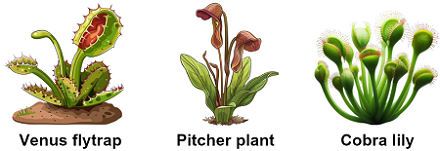
Read the statements below and determine which option is correct: Statement 1: Insectivorous plants trap and digest insects to obtain nutrients, particularly in nutrient-poor soils. Statement 2: Carnivorous plants primarily rely on photosynthesis for their nutritional needs.
Answer: (c) Both statements are correct.
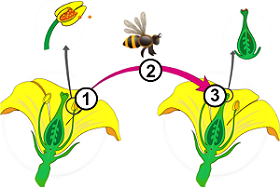
Pollination is a critical process in the life cycle of flowering plants. Read the statements below about pollination and determine which one is true: A: Pollination only occurs when insects visit flowers to collect nectar. B: Wind can also play a role in pollination by carrying pollen from one flower to another. C: Pollination leads to the immediate formation of seeds without any further processes.
Answer: (b) Only B is correct
While helping in your garden, you notice some burrs, the spiky seed pods of a burdock plant, sticking to your socks. How does this adaptation help the burdock plant spread its seeds?
Answer: (c) Animals like dogs and other furry creatures carry the burrs to new places.
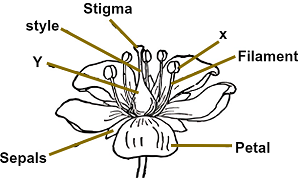
The picture below shows two parts, X and Y, involved in the pollination process in a flower. Which of the statement(s) is/are correct? A. Y helps transfer pollen to X. B. Y is part of the flower that produces seeds. C. Pollinators, such as bees, help in the process involving X and Y.
Answer: (d) B and C only
The table below shows four plants (A, B, C, and D) and their dispersal methods. Based on the dispersal methods listed, Which plant's seed dispersal method would be most effective in a dense forest environment, where competition for space and resources is high? Plant Seed dispersion method Plant A Light, winged seeds Plant B Floating, waterproof seeds Plant C Sticky or hooked seeds Plant D Pods that burst open when dry
Answer: (c) Plant C
A farmer wants to increase the number of healthy plants in his garden using artificial vegetative reproduction. He aims to quickly propagate plants while ensuring they are genetically identical to the parent plant. Which of the following methods would be most effective for achieving the farmer's goal? A. Cutting B. Seed planting C. Natural vegetative reproduction
Answer: (a) A only
In a garden ecosystem, various plants rely on specific agents of pollination based on their flowering characteristics. During a garden observation, a student noted the observation in the form of table. Based on these observations, which of the following statements is true about the agents of pollination for the plants mentioned? Characteristic Description A Brightly coloured flowers attracting butterflies and bees. B Strongly scented flowers visited by night-flying moths. C Flowers with long tubes filled with nectar, attracting butterflies.
Answer: (a) Only A is correct.
The table below shows the average number of leaves produced by bean plants grown under different temperature conditions after 3 weeks. Based on the data, what can you conclude about the factors affecting the growth of bean plants? Temperature (°C) Soil Type Average Number of Leaves (after 3 weeks) 15 Sandy 5 15 Clay 4 20 Sandy 8 20 Clay 7 25 Sandy 12 25 Clay 10 30 Sandy 6 30 Clay 5
Answer: (b) Bean plants grow best with a combination of moderate temperatures and well-drained soil.
Carefully read through the passage and answer the following questions. The Role of Pollinators in Plant Reproduction Have you ever wondered how plants produce the fruits and seeds we enjoy? Pollination is a crucial step in this process, where pollen is transferred from the male part of a flower (the anther) to the female part (the stigma). Different plants attract specific pollinators based on their characteristics, ensuring successful reproduction. Brightly coloured flowers may attract bees and butterflies, while strong scents might lure in night-flying moths. Flowers with long tubes filled with nectar are often designed to attract hummingbirds, while white flowers blooming in clusters may draw beetles. Each pollinator plays a unique role in helping plants thrive and reproduce in various environments. Additionally, many plants have evolved unique strategies to ensure their pollen reaches the right pollinators. For instance, some flowers may open during specific times of the day to coincide with the activity of their pollinators, while others might use rewards like nectar to entice them. This intricate relationship between plants and their pollinators is vital for maintaining healthy ecosystems, as it supports biodiversity and food production. So, the next time you see a flower buzzing with activity, remember the vital role these agents of pollination play in the ecosystem! A certain flower species has long, tubular petals and produces sweet nectar. Based on these features, which type of pollinator is this flower most likely adapted to attract?
Answer: (d) Hummingbirds with long beaks
Carefully read through the passage and answer the following questions. The Role of Pollinators in Plant Reproduction Have you ever wondered how plants produce the fruits and seeds we enjoy? Pollination is a crucial step in this process, where pollen is transferred from the male part of a flower (the anther) to the female part (the stigma). Different plants attract specific pollinators based on their characteristics, ensuring successful reproduction. Brightly coloured flowers may attract bees and butterflies, while strong scents might lure in night-flying moths. Flowers with long tubes filled with nectar are often designed to attract hummingbirds, while white flowers blooming in clusters may draw beetles. Each pollinator plays a unique role in helping plants thrive and reproduce in various environments. Additionally, many plants have evolved unique strategies to ensure their pollen reaches the right pollinators. For instance, some flowers may open during specific times of the day to coincide with the activity of their pollinators, while others might use rewards like nectar to entice them. This intricate relationship between plants and their pollinators is vital for maintaining healthy ecosystems, as it supports biodiversity and food production. So, the next time you see a flower buzzing with activity, remember the vital role these agents of pollination play in the ecosystem! A plant species relies on a specific pollinator that has declined due to environmental changes. Which adaptation would most likely increase the plant’s chances of survival?
Answer: (d) Producing flowers that resemble nearby plants pollinated by a common insect
| Topic | Quiz |
|---|---|
| Animal Diversity | Quiz on Animal Diversity |
| Ecosystems and Interdependence | Quiz on Ecosystems and Interdependence |
| Food and Health | Quiz on Food and Health |
| Force, Work and Energy | Quiz on Force, Work and Energy |
| Circulatory and Skeletal system | Quiz on Circulatory and Skeletal system |
| Light and Shadows | Quiz on Light and Shadows |
| Simple Machines | Quiz on Simple Machines |
| Matter | Quiz on Matter |
| Plant Growth and Reproduction | Quiz on Plant Growth and Reproduction |
| Natural Calamities and Resources | Quiz on Natural Calamities and Resources |
| Sound and Noise | Quiz on Sound and Noise |