The circulatory system is responsible for transporting blood, oxygen, and nutrients throughout the body. It includes the heart, blood vessels, and blood. The skeletal system provides structure and support to the body and protects internal organs. It is made up of bones and joints. Learning about the circulatory and skeletal systems helps us understand how our body moves and stays alive. This Body Circulatory Quiz for Grade 5 also teaches us to take care of our hearts and bones through proper diet and exercise. Answer these 10 questions to check your knowledge about these two vital systems.
Which of the following statements accurately describes the pumping action of the human heart? A) The heart pumps oxygen-rich blood to the body and returns oxygen-poor blood to the lungs to get oxygen. B) The heart pumps blood in two different directions simultaneously. C) The heart circulates blood throughout the body, ensuring all organs receive nutrients. D) The heart pumps blood to the lungs for oxygen and to the rest of the body for circulation.
Answer: (c) A and D only
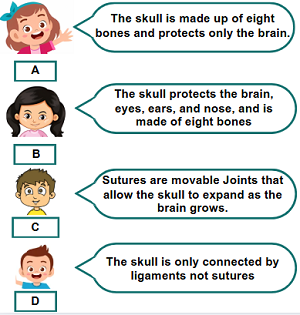
Study the statements made by four pupils below. Which pupils were correct?
Answer: (b) B
Match each type of joint with its correct description by selecting the appropriate option. Types of Joints Descriptions 1 Hinge Joint A This joint allows for a limited range of motion in multiple directions, making it somewhat flexible, like in your shoulders. 2 Ball-and- Socket Joint B This joint primarily moves back and forth, similar to how doors swing open and close, as seen in your elbows and knees. 3 Pivot Joint C This joint can rotate around a single point, allowing for specific movements, like the way your neck turns. 4 Gliding Joint D This joint enables a sliding motion that helps bones shift past each other, seen in areas like your wrists and ankles.
Answer: (a) 1-B, 2-C, 3-A, 4-D
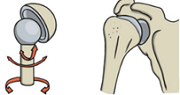
The diagram below shows a type of joint in the human skeletal system. What is the primary function of this type of joint in the body?
Answer: (d) To facilitate rotation and movement in multiple directions
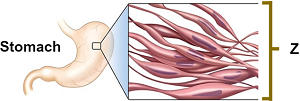
In the diagram below, Z represents a type of muscle associated with the stomach. Which of the following statements correctly describes the function and type of the muscle shown?
Answer: (c) Involuntary muscle- works automatically to mix and propel food through the digestive system.
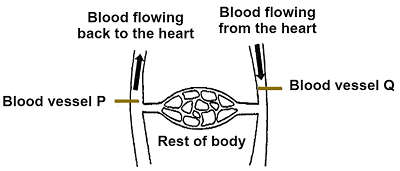
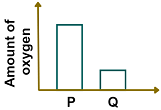
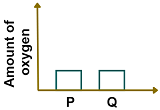
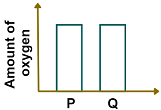
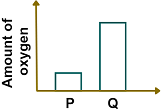
10 Blood samples were taken from the blood vessels, P and Q, in a human circulatory system. Which graph correctly represents the amount of oxygen in the blood vessels?
Answer: (d)
After you run or exercise, your body requires more oxygen to function properly. The circulatory system works closely with the respiratory system during this time. How does the body’s circulatory system respond to assist with breathing after exercise?
Answer: (a) It increases blood flow to carry more oxygen to the muscles.
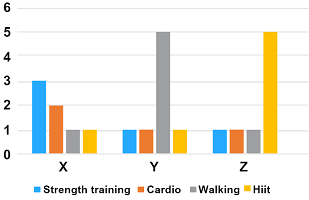
The chart below illustrates the exercise routines of three individuals (Person X, Person Y, and Person Z). Each section of the chart represents the frequency and type of physical activity they engage in. Based on the information provided in the chart, which person is most likely to have a higher risk of developing weak muscles?
Answer: (b) Person Y
Involuntary muscles are essential for various functions in the human body, and they work without us thinking about them. Consider the following examples related to involuntary muscles and analyse which statement is the most accurate. A. When we sleep, our heart continues to pump blood because the heart is an involuntary muscle. B. When we exercise, our stomach muscles help us run faster by moving food through our digestive system. C. Involuntary muscles, like those in our arms, allow us to wave hello without thinking about it.
Answer: (a) Only A
Carefully read through the passage and answer the following questions: The Importance of Healthy Bones and Muscles Have you ever thought about what keeps your body strong and able to move? Bones and muscles play essential roles in supporting our bodies and allowing us to perform daily activities. Our bones, which are like the framework of a house, provide structure and protect vital organs. Muscles, on the other hand, are responsible for movement, enabling us to run, jump, and even smile! To keep our bones healthy, it’s important to consume enough calcium and vitamin D. Foods like milk, cheese, and leafy greens can help build strong bones. Exercise is equally vital; activities like jumping, running, and lifting weights stimulate bone growth and strength. Muscles also need attention! Regular exercise, particularly strength training, helps build muscle mass and endurance. Activities like playing sports, dancing, or even just walking can help maintain muscle health. So, the next time you stretch your arms or run around, think about the incredible teamwork between your bones and muscles in keeping you active and healthy! After learning about how bones and muscles work together, which of the following conclusions can be most accurately drawn about the importance of healthy bones and muscles?
Answer: (c) Both healthy bones and muscles are crucial for maintaining overall body strength and mobility.
| Topic | Quiz |
|---|---|
| Animal Diversity | Quiz on Animal Diversity |
| Ecosystems and Interdependence | Quiz on Ecosystems and Interdependence |
| Food and Health | Quiz on Food and Health |
| Force, Work and Energy | Quiz on Force, Work and Energy |
| Circulatory and Skeletal system | Quiz on Circulatory and Skeletal system |
| Light and Shadows | Quiz on Light and Shadows |
| Simple Machines | Quiz on Simple Machines |
| Matter | Quiz on Matter |
| Plant Growth and Reproduction | Quiz on Plant Growth and Reproduction |
| Natural Calamities and Resources | Quiz on Natural Calamities and Resources |
| Sound and Noise | Quiz on Sound and Noise |