An ecosystem is a community of living organisms and their physical environment interacting together. It includes plants, animals, microorganisms, soil, water, and air. All living things in an ecosystem depend on each other for survival. This is called interdependence. Learning about ecosystems and interdependence helps us understand the balance of nature. This well-designed Ecosystem Quiz for Grade 5 tests your knowledge about how human activities can affect ecosystems and the importance of conservation. Try these 10 questions to see how well you understand ecosystems and the relationships within them.
What is the main reason conservation is important in ecosystems?
Answer: (a) To prevent the extinction of plants and animals
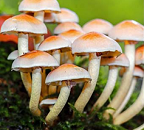
While hiking in a forest, you notice mushrooms growing on a fallen, decaying tree. If you wanted to explain the importance of mushrooms in the ecosystem to a friend, how would you describe their role in relation to the decaying tree?
Answer: (b) The mushrooms are decomposing the tree, breaking it down for nutrients.
A group of students conducted an experiment by placing identical plants in two separate sealed containers. In Container A, they included a small insect along with the plant. In Container B, they only placed the plant. After two weeks, the plant in Container A was healthier than the one in Container B. What is the most likely explanation for this observation?
Answer: (c) The insect released carbon dioxide that the plant used for photosynthesis.
A group of animals in a forest ecosystem feeds on plants, while some of the plants rely on insects for pollination. If the number of pollinators decreases due to pollution, what is most likely to happen to the forest ecosystem?
Answer: (d) The balance of the ecosystem may be disrupted because both plants and animals depend on each other.
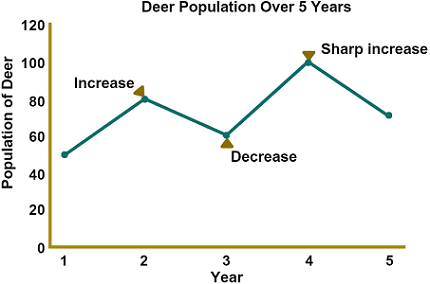
Biologists are observing a population of deer in a forest. The graph below shows the deer population over a 5-year period, with notable increases and decreases. What factors could explain this population trend?
Answer: (d) All of the above factors influencing the population.
A class sets up two gardens: one with a variety of flowers and another with only grass. After watering both gardens equally and observing them over several weeks, they measure the number of insects visiting each garden and the growth of the plants. Based on their observations, which of the following conclusions can be drawn about the relationship between plant diversity and insect attraction?
Answer: (d) The variety of flowers in the first garden likely attracts more insects, which may enhance plant growth through pollination.
A student observes a hummingbird feeding on nectar from various flowers in a garden. While moving from flower to flower, the hummingbird collects small bits of pollen on its beak. After some time, the hummingbird visits a flower of a different species. What is the MOST LIKELY role of hummingbirds in the life cycle of flowering plants?
Answer: (a) Hummingbirds spread pollen between different flower species, aiding in cross-pollination.
Carefully read through the passage and answer the following questions. The Web of Life: Interdependence in Ecosystems In every ecosystem, the delicate balance of life is maintained through the interdependence of various organisms. Imagine a vibrant rainforest where towering trees provide shelter for countless species. The large leaves capture sunlight, which not only fuels their growth but also supports the entire ecosystem. Birds, insects, and mammals all rely on these trees for food, nesting, and protection from predators. In return, these animals play vital roles in pollinating flowers, dispersing seeds, and even breaking down dead plant material. Consider the fascinating relationship between bees and flowering plants. As bees visit flowers to collect nectar, they inadvertently transfer pollen from one bloom to another. This process is essential for the reproduction of many plants, ensuring the growth of fruits and seeds. Without bees, some plant species would struggle to reproduce, leading to fewer food sources for herbivores, which, in turn, affects carnivores higher up in the food chain. This intricate web of life shows how the decline or absence of one species can ripple through an entire ecosystem. In the oceans, the relationship between fish and coral reefs is equally important. Coral provides a home for many fish species, while the fish help keep the coral clean by eating algae that can overwhelm it. If fish populations decline due to overfishing or pollution, the coral reefs can become unhealthy, leading to a loss of habitat for numerous marine organisms. Thus, the interdependence of species ensures the survival and health of ecosystems around the world. If coral reefs are damaged by pollution and fish populations begin to decline, what might be a long-term effect on other marine animals?
Answer: (b) The loss of coral reefs would lead to a decrease in food sources for marine animals.
Carefully read through the passage and answer the following questions. The Web of Life: Interdependence in Ecosystems In every ecosystem, the delicate balance of life is maintained through the interdependence of various organisms. Imagine a vibrant rainforest where towering trees provide shelter for countless species. The large leaves capture sunlight, which not only fuels their own growth but also supports the entire ecosystem. Birds, insects, and mammals all rely on these trees for food, nesting, and protection from predators. In return, these animals play vital roles in pollinating flowers, dispersing seeds, and even breaking down dead plant material. Consider the fascinating relationship between bees and flowering plants. As bees visit flowers to collect nectar, they inadvertently transfer pollen from one bloom to another. This process is essential for the reproduction of many plants, ensuring the growth of fruits and seeds. Without bees, some plant species would struggle to reproduce, leading to fewer food sources for herbivores, which, in turn, affects carnivores higher up in the food chain. This intricate web of life shows how the decline or absence of one species can ripple through an entire ecosystem. In the oceans, the relationship between fish and coral reefs is equally important. Coral provides a home for many fish species, while the fish help keep the coral clean by eating algae that can overwhelm it. If fish populations decline due to overfishing or pollution, the coral reefs can become unhealthy, leading to a loss of habitat for numerous marine organisms. Thus, the interdependence of species ensures the survival and health of ecosystems around the world. Why might the decline of fish populations due to overfishing have a more significant impact on coral reefs than on other marine habitats?
Answer: (c) Fish play a vital role in maintaining coral health by preventing algae overgrowth, which can harm the reefs.
Carefully read through the passage and answer the following questions. Protecting Our Planet: Human Impact and Conservation As human populations grow, our actions increasingly impact ecosystems around the world. Imagine a forest that has stood for centuries, filled with tall trees, chirping birds, and a variety of plants and animals. However, when trees are cut down to make space for roads, farms, or cities, the forest ecosystem changes drastically. Without enough trees, animals lose their homes, food becomes scarce, and soil quality declines. This process, known as deforestation, affects not only the forest but also the entire planet, as trees play a key role in cleaning the air by absorbing carbon dioxide. Another major impact on ecosystems is pollution. Factories, vehicles, and plastic waste are major sources of pollution, which can harm land, water, and air. For example, plastic waste in the ocean poses a significant threat to marine life. Sea creatures like turtles and fish often mistake plastic for food, which can be dangerous or even fatal. Pollution doesn’t just affect individual animals but can disrupt entire ecosystems, making it harder for organisms to survive and thrive. To counter these impacts, conservation efforts are put in place to protect ecosystems. Conservation includes activities like setting up protected areas, creating laws to reduce pollution, and promoting the use of renewable resources. Many governments and organizations work together to restore damaged ecosystems and protect endangered species. By understanding the effects of our actions and making sustainable choices, humans can help preserve the balance of ecosystems for future generations. Which statement best describes the role of renewable resources in conservation efforts?
Answer: (c) Using renewable resources helps reduce pollution and conserve ecosystems.
| Topic | Quiz |
|---|---|
| Animal Diversity | Quiz on Animal Diversity |
| Ecosystems and Interdependence | Quiz on Ecosystems and Interdependence |
| Food and Health | Quiz on Food and Health |
| Force, Work and Energy | Quiz on Force, Work and Energy |
| Circulatory and Skeletal system | Quiz on Circulatory and Skeletal system |
| Light and Shadows | Quiz on Light and Shadows |
| Simple Machines | Quiz on Simple Machines |
| Matter | Quiz on Matter |
| Plant Growth and Reproduction | Quiz on Plant Growth and Reproduction |
| Natural Calamities and Resources | Quiz on Natural Calamities and Resources |
| Sound and Noise | Quiz on Sound and Noise |