All acids have a total hydrogen ion concentration of 1 or more and have a sour taste. The bitter taste is attributed to bases. Salts can be formed by and are generally used to neutralise acids and bases. The attributes of acids, bases, and salts and their neutralisation reactions allow for a greater understanding of their chemical properties and interactions. By solving this acid-base and salts Grade 10 quiz, students will get insight into pH, chemical properties of common indicators, and the overall use of these chemicals, including the salts, in a household, a lab, and an industry. To test your understanding, complete this acids, bases, and salts quiz and know how much you know about the depth and concept of these three.
Which pair of elements is most likely to form an ionic compound with each other?
Answer: (a) Barium, Chlorine
In the following question, you will find an assertion and a reason. Select the appropriate option that applies. Assertion (A): Double replacement reactions always produce a precipitate. Reason (R): In a double replacement reaction, two ionic compounds exchange their ions.
Answer: (c) A is false, but R is true.
During a reaction, aluminium is burnt in chlorine gas to form aluminium chloride. The energy released per mole of aluminium burnt is exceptionally high. - The balanced equation for the reaction is: 2Al(s) + 3Cl2(g) → 2AlCl3(s) - Chlorine gas is a diatomic molecule with weak intermolecular forces but strong covalent bonds. Based on the information, what contributes MOST to the high energy release?
Answer: (b) Formation of strong ionic bonds in AlCl3.
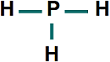
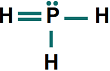
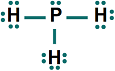
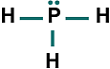
Which of the following correctly represents the Lewis structure for PH3?
Answer: (d)
Which information is most important to determine the empirical formula of a compound?
Answer: (c) The percentage composition by mass of the compound
At STP, the volume occupied by 0.5 moles of N2 gas is:
Answer: (b) 11.2 L
A student heats a sample of blue hydrated copper(II) sulphate crystals (CuSO4⋅5H2O) in a lab experiment. The heating drives off the water as water vapour, leaving behind white anhydrous copper(II) sulphate (CuSO4). The student starts with 25.0 g of hydrated copper(II) sulphate and wants to determine the mass of the anhydrous salt left behind. What is the mass of anhydrous copper(II) sulphate (CuSO4) formed after heating? (Molar masses: CuSO4 = 160, H2O = 18)
Answer: (a) 16.0 g
A sample of an unknown compound contains only carbon and hydrogen. If the empirical formula is found to be CH, which of the following best describes what this tells us?
Answer: (d) The simplest ratio of C:H is 1:1, but it could be C₂H₂, C₆H₆, or any other multiple.
A chemist reacts 8.1 g of aluminium (Al) with 10.65 g of chlorine gas (Cl₂) to produce aluminium chloride (AlCl₃) according to the balanced equation: 2Al + 3Cl2 → 2AlCl3 Given that the molar masses are: Al = 27 g/mol, Cl₂ = 71 g/mol, and AlCl₃ = 133.5 g/mol, which statements are correct? 1. Chlorine gas is the limiting reagent. 2. The theoretical yield of AlCl₃ is 13.35 g. 3. Aluminium is completely consumed in the reaction. 4. The actual yield of AlCl₃ cannot exceed 13.35 g.
Answer: (b) Only 1, 2, and 4 are correct.
In a reaction, if the theoretical yield of a product is 5.0 g, but the actual yield obtained by the student is 4.0 g, which of the following is true about the scenario? A. The reaction’s efficiency is 80%. B. The limiting reagent must have been used in excess. C. Experimental errors or side reactions may have lowered the actual yield.
Answer: (d) A and C only
| Topic | Quiz |
|---|---|
| Acids, Bases and Salts | Quiz on Acids, Bases and Salts |
| Calorimetry | Quiz on Calorimetry |
| Chemical Reactions, Mole Concept and Stoichiometry | Quiz on Chemical Reactions, Mole Concept and Stoichiometry |
| Current Electricity and Electromagnetism | Quiz on Current Electricity and Electromagnetism |
| Energy Sources and Ecosystem | Quiz on Energy Sources and Ecosystem |
| Cell and Fundamentals of Genetics and Heredity | Quiz on Cell and Fundamentals of Genetics and Heredity |
| Life Processes, Control and Coordination | Quiz on Life Processes, Control and Coordination |
| Machines | Quiz on Machines |
| Optics and Spectrum | Quiz on Optics and Spectrum |
| Organic Chemistry | Quiz on Organic Chemistry |
| Periodicity in Properties of Elements and Metallurgy | Quiz on Periodicity in Properties of Elements and Metallurgy |
| Reproduction in Organisms | Quiz on Reproduction in Organisms |