The cell is the tiniest structural and functional unit of life. Simply put, all life forms consist of one or more cells. A typical cell contains different organelles such as the nucleus, mitochondria, and ribosomes, each of which has its own purpose. The cell, being the smallest unit of life, gives us insight into the cell structure, cell division, and cell functions. This Cell Biology Quiz for grade 9 tests your knowledge about the differences between prokaryotes and eukaryotes, along with plant and animal cells. Try answering these 10 questions to check your knowledge on the structure and functions of the cells.
If a drug inhibits the function of the smooth endoplasmic reticulum (SER), which of the following cellular processes would be most directly affected?
Answer: (b) Lipid synthesis
A researcher genetically modifies a plant to produce red flowers instead of yellow. This change is likely due to the alteration of which type of plastid?
Answer: (b) Chromoplasts
Consider the following statements about cell theory: 1. Cell theory implies that the cell is the basic unit of life and carries out all life processes. 2. All cells, regardless of type, have the same structure and function according to cell theory. 3. Cell theory states that all living organisms are composed of one or more cells. 4. According to cell theory, cells arise from non-living matter through spontaneous generation. Which of the above statements are true?
Answer: (d) 1 and 3
A team of researchers is using a fluorescence marker to study the transport of proteins within a cell. They observe the marker moving from the rough ER to a series of stacked, membrane-bound sacs before reaching the cell membrane. Which organelle is the marker passing through?
Answer: (a) Golgi apparatus
In the following question, you will find an assertion and a reason. Select the appropriate option that applies. Assertion (A): Lysosomes contain digestive enzymes that break down waste materials. Reason (R): They are involved in protein synthesis.
Answer: (c) A is true, but R is false.
Alex conducted an experiment to observe the behaviour of plant and animal cells in different osmotic environments. He placed both types of cells in a hypotonic solution, where water moves into the cells. After some time, he observed that the plant cell maintained its integrity, while the animal cell lysed (burst). Considering the structural differences between plant and animal cells, what is the most likely reason for the difference in outcomes?
Answer: (a) The plant cell has a cell wall and can withstand turgor pressure.
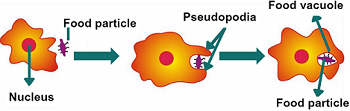
A biologist discovers a unicellular organism in pond water. The organism has pseudopodia, a flexible cell membrane, and ingests food particles by engulfing them. Which cellular process is primarily used by this organism for feeding?
Answer: (d) Endocytosis
Christina is studying a newly discovered unicellular organism under a microscope. She observes that the organism has a complex internal structure, including specialised compartments that perform distinct functions. Which characteristic of this organism would support the classification of it as a eukaryote?
Answer: (c) It contains membrane-bound organelles
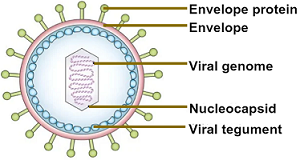
An educational program on cell theory teaches students about various cell types. During a discussion, one student claimed that viruses are living organisms because they contain genetic material. How should the teacher respond based on the principles of cell theory?
Answer: (b) Viruses are not considered living organisms because they cannot function independently and do not consist of cellular machinery.
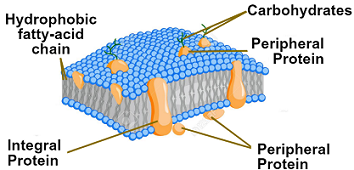
Carefully read through the passage and answer the following questions. Plasma membrane The cell membrane, composed of a phospholipid bilayer with embedded proteins, serves as a selective barrier that regulates the movement of substances in and out of the cell. Transport proteins facilitate the passage of ions and molecules, ensuring that essential nutrients enter the cell while waste products are expelled. This selective permeability is crucial for maintaining the internal environment of the cell, demonstrating the interdependence between the cell membrane and various cellular functions. Without these transport proteins, cells would be unable to efficiently manage their internal conditions, leading to potential imbalances and cellular dysfunction. If a certain ion channel protein in the cell membrane is blocked, preventing ions from entering the cell. What is the most immediate effect of this blockage on the cell’s functionality?
Answer: (d) Disruption of electrical signalling and cell communication.
| Topic | Quiz |
|---|---|
| Atomic Structure and Models | Quiz on Atomic Structure and Models |
| Biodiversity in Nature | Quiz on Biodiversity in Nature |
| The Cell - Basic Building Block of Life | Quiz on The Cell - Basic Building Block of Life |
| Biogeochemical Cycles in Ecosystems | Quiz on Biogeochemical Cycles in Ecosystems |
| Gravitational Phenomena | Quiz on Gravitational Phenomena |
| Human Health | Quiz on Human Health |
| Kinematics | Quiz on Kinematics |
| Matter in Various States | Quiz on Matter in Various States |
| Reproductive Biology - Plants | Quiz on Reproductive Biology - Plants |
| Purity and Composition | Quiz on Purity and Composition |
| Tissue Dynamics | Quiz on Tissue Dynamics |
| Work, Energy and Sound | Quiz on Work, Energy and Sound |