Biogeochemical cycles are the naturally occurring processes that recycle nutrients in the environment. The main cycles are the water, carbon, nitrogen, and oxygen cycles. These cycles are the ones that living organisms depend on for the continuous supply of the necessary elements. The process of learning through biogeochemical cycles Quiz for Grade 9 is basically testing your understanding regarding how nutrients are circulating in the global biosphere, atmosphere, hydrosphere, and lithosphere. Moreover, it teaches us the major roles of plants, animals, and microorganisms in sustaining the cycles, and what human activities do to them. You have 10 situations to test your knowledge about cycles of biogeochemical elements.
In advanced wastewater treatment, which method is primarily used to remove nitrogen and phosphorus to prevent eutrophication in receiving water bodies?
Answer: (b) Biological nutrient removal (BNR)
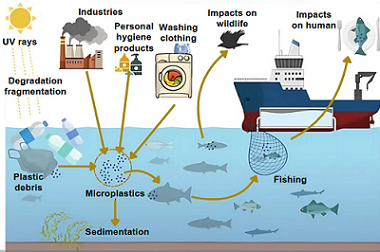
The diagram below illustrates the effects of improper waste disposal on terrestrial, aquatic, and atmospheric ecosystems. Which statement accurately describes the impact of improper waste disposal? A. Affects soil fertility and promotes invasive species. B. Leads to bioaccumulation in aquatic organisms. C. Contributes to climate change and reduces air quality.
Answer: (d) A, B and C
In the following question, you will find an assertion and a reason. Select the appropriate option that applies. Assertion (A): Proper wastewater management is essential for protecting public health and the environment. Reasoning (R): Untreated wastewater can contaminate drinking water sources and lead to the spread of waterborne diseases.
Answer: (a) Both A and R are true, and R is the correct explanation of A.
A developing country is facing various environmental and societal challenges due to rapid urbanisation and industrial growth. Observing the situation, which of the following factors is most likely contributing significantly to the other issues listed below? A. Increasing demand on limited food production B. Rapid loss of farmland due to soil erosion C. Rise in human population growth D. Increased levels of air pollution
Answer: (c) C
During her visit to a poultry farm, Perry observes that the chickens are suffering from various health issues. The farm workers mention that the birds are vulnerable to several types of pathogens. Based on this scenario, which of the following types of pathogens are poultry fowl most susceptible to?
Answer: (c) Virus, Bacteria and Fungi
Rick is a farmer who is working on improving the nutrient content of his soil using chemical fertilisers. He is considering different types of fertilisers to meet his crops' nutrient needs. Which of the following nutrients is not typically found in common chemical fertilisers that Rick might use?
Answer: (b) Iron
Ronny is analysing the challenges related to food security in her country. She identifies multiple factors affecting the availability, accessibility, and affordability of food for the population. Which of the following measures are most critical to solving the country's food problem? A. Increased production and storage of food grains. B. Ensuring easy access to food grains for all regions. C. Preventing wastage of food during storage and transportation.
Answer: (d) A, B and C
Sara is studying livestock farming in her region and has learned that cattle husbandry plays a crucial role in supporting various agricultural and economic activities. Based on the real-world uses of cattle, which of the following are common purposes for cattle husbandry? I. Milk production for dairy consumption. II. Egg production for commercial sale. III. Producing honey for food production. IV. Enhancing soil fertility through manure.
Answer: (a) I only
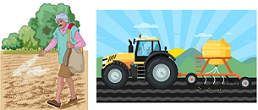
The image shows two ways of sowing seeds: one using a traditional method and the other using a seed drill. Based on their functions, what are the likely advantages of using a seed drill over a traditional method?
Answer: (b) It allows seeds to be sown at the correct depth in the soil.
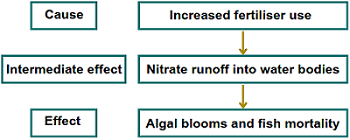
A cause-and-effect diagram is provided showing various links. Which process directly explains the intermediate effect in this chain?
Answer: (b) Leaching
| Topic | Quiz |
|---|---|
| Atomic Structure and Models | Quiz on Atomic Structure and Models |
| Biodiversity in Nature | Quiz on Biodiversity in Nature |
| The Cell - Basic Building Block of Life | Quiz on The Cell - Basic Building Block of Life |
| Biogeochemical Cycles in Ecosystems | Quiz on Biogeochemical Cycles in Ecosystems |
| Gravitational Phenomena | Quiz on Gravitational Phenomena |
| Human Health | Quiz on Human Health |
| Kinematics | Quiz on Kinematics |
| Matter in Various States | Quiz on Matter in Various States |
| Reproductive Biology - Plants | Quiz on Reproductive Biology - Plants |
| Purity and Composition | Quiz on Purity and Composition |
| Tissue Dynamics | Quiz on Tissue Dynamics |
| Work, Energy and Sound | Quiz on Work, Energy and Sound |