Biodiversity is a term that encompasses the entire variety of life forms on Earth, such as microorganisms, plants, and animals. It is present on Earth at different levels, namely, genetic, species, and ecosystem or habitat. By being high in biodiversity, a region guarantees the health and stability of its ecosystems. The opportunity to study and experience biodiversity in nature is a way to develop empathy towards and value the life on our planet. Take this biodiversity quiz for Grade 10 that tests your understanding of conservation, the main causes of biodiversity reduction, and the importance of protecting the species under such a threat. There are 10 questions that can be taken to assess your knowledge of biodiversity and its significance.
In the classification of living organisms, certain characteristics are used to differentiate the kingdoms. Which of the following characteristics is unique to the Animalia kingdom, setting it apart from other kingdoms such as Plantae, Fungi, and Protista?
Answer: (b) They are primarily heterotrophic, relying on other organisms for food.
The kingdom Plantae is primarily composed of autotrophic organisms that perform photosynthesis. Which of the following characteristics is most indicative of plants and distinguishes them from other kingdoms such as Fungi and Animalia?
Answer: (a) Plants have specialised structures such as roots and leaves that facilitate their autotrophic lifestyle.
In a recent environmental study, researchers noted a significant decline in a specific freshwater species that has a segmented body, a well-developed coelom, and bristles on each segment for locomotion. To which phylum does this organism belong, and what could be a potential ecological impact of its decline?
Answer: (b) Annelida; Decrease in soil aeration
In the following question, you will find an assertion and a reason. Select the appropriate option that applies. Assertion (A): Sponges do not possess true tissues or organs. Reason (R): Sponges have a porous body and rely on specialized cells, such as choanocytes, to perform various functions instead of organised tissues.
Answer: (a) Both Assertion (A) and Reason (R) are true, and Reason (R) is the correct explanation of Assertion (A).
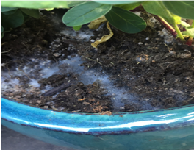
A gardener notices a white, fuzzy growth on the surface of the soil in her garden. After some research, she identifies it as a type of fungus. What is the most likely role of this fungal growth in the ecosystem?
Answer: (b) It acts as a decomposer, breaking down organic matter and recycling nutrients in the soil.
Imagine you are a scientist tasked with studying evolutionary relationships between different animal species. You have been given pairs of organisms to examine based on how closely related they are in their taxonomic classifications. Based on evolutionary principles, which two organisms from the list below would you predict to be most closely related?
Answer: (d) Crocodile and Lizard
Animals share many characteristics, but not all are universal to every animal. Based on your understanding of animal traits, which of the following is not a characteristic of all animals?
Answer: (d) Animals possess a spinal column.
You are tasked with writing the scientific name of the giant panda in a research paper. The name provided to you is Ailuropoda Melanoleuca. However, the formatting appears to be incorrect. After reviewing the guidelines for writing scientific names, which of the following is true about the given format? A. Ailuropoda should be followed by a period. B. The name should be underlined. C. The species name, Melanoleuca, should be in lowercase.
Answer: (c) C only
The table below outlines specific characteristics of five different animals (Animal I to Animal V). Each animal is described by three distinct features related to their anatomy and reproduction. Use this information to answer the following question. Why is Animal III potentially more vulnerable to dehydration compared to the other animals listed? Animal Skin Type Backbone Reproductive Method Additional Feature Animal I Hair Yes Placenta None Animal II Feathers No Shelled Egg Claws Animal III Smooth Skin Yes Non-shelled Egg None Animal IV Scaly Skin No Shelled Egg Claws Animal V Scaly Skin No Gills Aquatic
Answer: (c) Its smooth skin increases water loss through evaporation
The table below outlines specific characteristics of five different animals (Animal I to Animal V). Each animal is described by three distinct features related to their anatomy and reproduction. Use this information to answer the following question. Considering the characteristics provided, which pair of animals is most likely to have a more recent common ancestor based on evolutionary traits? Animal Skin Type Backbone Reproductive Method Additional Feature Animal I Hair Yes Placenta None Animal II Feathers No Shelled Egg Claws Animal III Smooth Skin Yes Non-shelled Egg None Animal IV Scaly Skin No Shelled Egg Claws Animal V Scaly Skin No Gills Aquatic
Answer: (d) Animal II and Animal IV
| Topic | Quiz |
|---|---|
| Atomic Structure and Models | Quiz on Atomic Structure and Models |
| Biodiversity in Nature | Quiz on Biodiversity in Nature |
| The Cell - Basic Building Block of Life | Quiz on The Cell - Basic Building Block of Life |
| Biogeochemical Cycles in Ecosystems | Quiz on Biogeochemical Cycles in Ecosystems |
| Gravitational Phenomena | Quiz on Gravitational Phenomena |
| Human Health | Quiz on Human Health |
| Kinematics | Quiz on Kinematics |
| Matter in Various States | Quiz on Matter in Various States |
| Reproductive Biology - Plants | Quiz on Reproductive Biology - Plants |
| Purity and Composition | Quiz on Purity and Composition |
| Tissue Dynamics | Quiz on Tissue Dynamics |
| Work, Energy and Sound | Quiz on Work, Energy and Sound |