Machines are tools that make our work easier and faster. Simple machines like levers, pulleys, wheels, and inclined planes help us lift heavy loads, cut objects, and move things with less effort. Machines use energy to do work. Learning about machines helps us understand how everyday tools function. This well-designed Machines Quiz for Grade 4 tests your knowledge about mechanical advantage and the principle of work. Machines are used in homes, industries, and transportation. Try these 10 questions to see how much you know about machines and their uses.
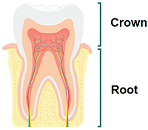
How do proper brushing and flossing help protect the crown and root of a tooth?
Answer: (a) By removing food particles and plaque that can cause cavities and gum disease.
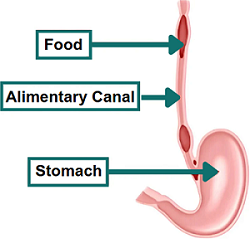
What happens if the food pipe (oesophagus) is blocked or damaged?
Answer: (c) The body might not get the nutrients it needs from food.
Riya avoids eating spicy junk food and sugary drinks and prefers home-cooked meals with vegetables. She also exercises for 20 minutes daily. Which of the following best explains how these habits support her digestion and excretion?
Answer: (a) They reduce strain on her digestive system and improve nutrient absorption.
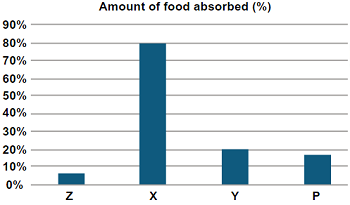
A graph shows the amount of food absorbed in different parts of the digestive system. The part with the highest food absorption is indicated on the graph. Which of the following is likely responsible for the highest absorption?
Answer: (b) X, which may be the small intestine
Mia's little brother has only 20 teeth, while Mia has 28 teeth. Mia’s dentist explains that she will get 4 more teeth when she grows older, and they will appear at the very back of her mouth. What are the additional teeth called, and why are they important for adults?
Answer: (b) Wisdom teeth; they help in chewing tough food.
The table below shows the time required for digestion based on meal size and composition. If a student wants to have a meal before bedtime to avoid discomfort during sleep, which choice is the best and why? Meal Type Meal Size Digestion Time (hours) Balanced meal (protein, fiber, fats) Small 3.5 High-fat meal Large 7 Fiber-rich meal Medium 4
Answer: (d) A small balanced meal because it digests quickly and provides nutrients.
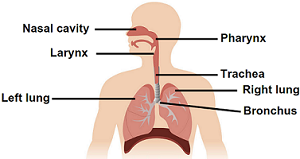
Why are the rings of cartilage in the windpipe (trachea) important for the function of the respiratory system?
Answer: (b) They support the windpipe to keep it open, ensuring air can flow freely to the lungs.
You have three mystery foods labelled A, B, and C. Each food affects the digestive system in a different way. Based on the following observations, identify the food and its digestive function correctly: A. Food A provides a quick source of energy and is easily broken down in the stomach. B. Food B helps in the absorption of nutrients by providing fibre to aid digestion. C. Food C is rich in protein and helps in building and repairing tissues after digestion.
Answer: (d) A: Rice, B: Cabbage, C: Chicken
Consider the following passage and answer the following question: The Incredible Journey of Food in the Human Body The digestive system is an amazing process that turns food into energy and nutrients to keep us healthy. It all starts in the mouth, where teeth crush the food and saliva mixes with it. The saliva has substances that begin breaking the food down. Next, the food travels down the oesophagus to the stomach. The stomach mixes the food with juices that help break it down further. Then, the food moves to the small intestine, where tiny structures called villi absorb nutrients into the bloodstream. These nutrients give the body energy and help it grow and repair. Finally, any leftover waste moves to the large intestine, where most of the water is absorbed. The remaining solid waste is stored in the rectum and then eliminated through the anus. This whole process helps the body get the nutrients it needs to stay healthy. What might happen if the large intestine stopped absorbing water?
Answer: (b) Solid waste would not form properly.
Consider the following passage and answer the following question: The Incredible Journey of Food in the Human Body The digestive system is an amazing process that turns food into energy and nutrients to keep us healthy. It all starts in the mouth, where teeth crush the food and saliva mixes with it. The saliva has substances that begin breaking the food down. Next, the food travels down the oesophagus to the stomach. The stomach mixes the food with juices that help break it down further. Then, the food moves to the small intestine, where tiny structures called villi absorb nutrients into the bloodstream. These nutrients give the body energy and help it grow and repair. Finally, any leftover waste moves to the large intestine, where most of the water is absorbed. The remaining solid waste is stored in the rectum and then eliminated through the anus. This whole process helps the body get the nutrients it needs to stay healthy. If the rectum could not store waste, how would the digestive system be affected?
Answer: (c) Solid waste would not be stored and processed for elimination
| Topic | Quiz |
|---|---|
| Animal Biology | Quiz on Animal Biology |
| Earth's Structure and Natural Resources | Quiz on Earth's Structure and Natural Resources |
| Energy | Quiz on Energy |
| Food and Nutrition | Quiz on Food and Nutrition |
| Force and Motion | Quiz on Force and Motion |
| Human Body | Quiz on Human Body |
| Machines | Quiz on Machines |
| Materials and Solutions | Quiz on Materials and Solutions |
| Measurement | Quiz on Measurement |
| Plant Biology | Quiz on Plant Biology |
| Solar System and Space | Quiz on Solar System and Space |