Earth is the third planet from the sun and the only known planet to harbour life. It has a layered structure consisting of the crust, mantle, outer core, and inner core. The Earth's surface is divided into continents and oceans. It rotates on its axis every 24 hours, causing day and night, and revolves around the sun in about 365 days, creating seasons. The moon, Earth's natural satellite, affects ocean tides through its gravitational pull. This Earth and Universe Quiz for Class 7 explores these planetary features and the vast cosmic expanse beyond our world. The universe is an enormous expanse containing billions of galaxies, each with millions or billions of stars. Our solar system is part of the Milky Way galaxy and includes the sun, eight planets, their moons, asteroids, comets, and meteoroids. Learning about Earth and the universe helps students explore geology, astronomy, and space science. Answer these 10 questions to test your knowledge.
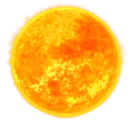
Which of the following is NOT a characteristic of the Sun? A) It is a star. B) It produces its own light and heat. C) It is the centre of the Milky Way. D) It is made mostly of hydrogen and helium.
Answer: (c) C only
Fill in the blank: If a new telescope allowed scientists to see small rocky planets beyond Neptune, what would they be classified as _____________.
Answer: (c) dwarf planets
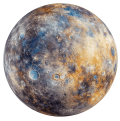
Jack was astonished to know that a day on Mercury last longer than a year on Mercury. Help him find out the reason for the same.
Answer: (a) Mercury spins on its axis very slowly compared to how fast it orbits the Sun.
Fill in the blanks: During a ____ eclipse, the Moon comes between the Earth and the Sun, casting a ____ on Earth. This results in a ____ eclipse if the Moon completely blocks the Sun.
Answer: (b) solar, shadow, total
A scientist observes a celestial body that does not emit its own light but reflects sunlight, has a rocky surface, and orbits a planet. What is the most accurate classification of this object?
Answer: (d) A natural satellite
Read the statement and the reason and choose the correct option: Statement: The Moon has extreme temperatures, with very hot days and freezing nights. Reason: The Moon has no atmosphere to regulate temperature.
Answer: (d) Both the statement and the reason are correct, and the reason correctly explains the statement.
If scientists wanted to explore a planet with extreme heat, slow rotation and thick clouds, which planet should they study?
Answer: (b) Venus
During a total lunar eclipse, why does the Moon appear red instead of completely disappearing?
Answer: (b) Sunlight bends around Earth, and only red light reaches the Moon.
NASA scientists want to study the Sun’s outer atmosphere in detail. When is the best time to observe it?
Answer: (a) During a total solar eclipse
A student in Australia sees a waxing crescent Moon in the sky. At the same time, a student in North America looks at the Moon. What will the student in North America most likely see?
Answer: (a) A waxing crescent, but flipped upside down compared to what the Australian student sees.
| Topic | Quiz |
|---|---|
| Human Body and Health | Quiz on Human Body and Health |
| Natural Resources and Calamities | Quiz on Natural Resources and Calamities |
| Earth and Universe | Quiz on Earth and Universe |
| Food and Its Component | Quiz on Food and Its Component |
| Fibre to Fabric | Quiz on Fibre to Fabric |
| Sorting and Separation of Materials | Quiz on Sorting and Separation of Materials |
| Matter and Changes Around Us | Quiz on Matter and Changes Around Us |
| Living Organisms and Their Surroundings | Quiz on Living Organisms and Their Surroundings |
| Motion and Measurement of Distances | Quiz on Motion and Measurement of Distances |
| Light, Shadows and Reflection | Quiz on Light, Shadows and Reflection |
| Electricity and Circuits | Quiz on Electricity and Circuits |
| Fun with Magnets | Quiz on Fun with Magnets |
| Our Environment | Quiz on Our Environment |