Our environment includes all living and non-living things that surround us. Living components are plants, animals, and microorganisms, while non-living components include air, water, soil, sunlight, and temperature. These components interact with each other and form ecosystems. A healthy environment is essential for the survival of all life forms. However, human activities like pollution, deforestation, industrialisation, and excessive use of resources have caused environmental degradation. This Our Environment Class 5 Science Quiz addresses these critical environmental challenges and conservation strategies. Issues like global warming, loss of biodiversity, and waste accumulation threaten the planet. Learning about the environment helps students understand ecological balance and the need for conservation. It encourages sustainable practices like recycling, saving water and energy, and planting trees. Answer these 10 multiple-choice questions to check your environmental awareness.
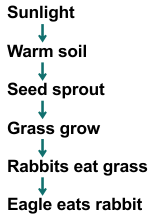
Look at the flowchart. Which of these statements best explains how both abiotic and biotic factors are shown in the flowchart?
Answer: (b) Non-living things help start the food chain
Which environment is likely to be the hottest based on the table below? Environment Sunlight Hours Temperature A 10 30°C B 6 25°C C 8 28°C D 12 35°C
Answer: (d) Environment D
Which sentence BEST explains the difference between renewable and non-renewable resources?
Answer: (b) Renewable resources can replenish quickly, while non-renewable take millions of years to form.
Match each pollution source with its effect using logic. Source Effect 1 Firecrackers A Contaminated drinking water 2 Factory Smoke B Hearing loss in animals 3 Loudspeakers C Breathing problems 4 Oil Spills D Marine animal deaths
Answer: (d) 1-B, 2-C, 3-A, 4-D
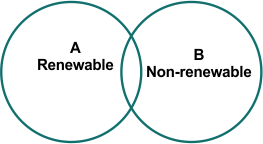
Which of the following resources belongs exclusively in Circle A?
Answer: (c) Sunlight
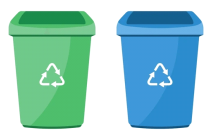
Your school has two bins as shown. You are holding the following items: 1. An empty milk carton 2. A leftover sandwich 3. A glass bottle 4. A used paper napkin Which items should go in the green bin?
Answer: (c) Sandwich and paper napkin
Consider the following statements and choose the correct option: Statement A: Non-biodegradable substances improve soil fertility by adding essential nutrients. Statement B: Non-biodegradable substances like metal cans can cause harm to animals if not properly disposed of.
Answer: (b) Statement B is correct and Statement A is wrong
Read the statements below and identify the wrong ones correctly: 1. We should add colourful powder to drinking water to make it smell better after a flood. 2. We should boil and filter drinking water to make it safer after a flood. 3.Freezing drinking water for many hours does not make it safe. 4. Mixing drinking water with river water makes it safer after a flood.
Answer: (a) 1 and 4
Which of the following actions would MOST LIKELY increase soil erosion in an area?
Answer: (c) Removing large numbers of trees from a hillside
The flowchart below shows the basic processes that occur in the environment: Step 1: Plants absorb carbon dioxide and release oxygen. Step 2: Animals breathe oxygen and release carbon dioxide. Step 3: Decomposers break down dead plants and animals, releasing nutrients back into the soil. Step 4: Water is absorbed by plants, which help clean the air. Which of the following shows the correct relationship between these steps?
Answer: (a) Step 1 → Step 2 → Step 3 → Step 4
| Topic | Quiz |
|---|---|
| Plants | Quiz on Plants |
| Animals | Quiz on Animals |
| Birds | Quiz on Birds |
| Housing and Clothing | Quiz on Housing and Clothing |
| Transport and Communication | Quiz on Transport and Communication |
| Human Body | Quiz on Human Body |
| Earth and Universe | Quiz on Earth and Universe |
| Matter and Material | Quiz on Matter and Material |
| Light and Sound | Quiz on Light and Sound |
| Our Environment | Quiz on Our Environment |
| Food and Digestion | Quiz on Food and Digestion |
| Force, Work and Energy | Quiz on Force, Work and Energy |