
Force is any push or pull applied on an object that can change its state of rest or motion. Forces can be contact forces like friction and tension, or non-contact forces like gravity and magnetism. Work is said to be done when a force causes an object to move in the direction of the force. Energy is the capacity to do work. It exists in many forms, such as mechanical, heat, light, sound, electrical, and chemical energy. This Force Work and Energy Class 5 Quiz examines how these concepts apply to everyday situations and scientific principles. Energy can be transformed from one form to another, but cannot be created or destroyed. Understanding force, work, and energy helps students grasp fundamental concepts of physics and how things function around us. These concepts are applied in machines, sports, and everyday activities. Attempt these 10 multiple-choice questions to evaluate your understanding.
Alex is pushing a box across a floor. Which of the following actions would NOT be considered "work" according to the scientific definition?
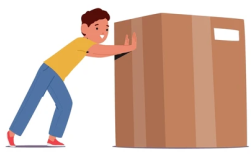
Answer: (a) Alex pushes the box, but it doesn't move
You are riding a bicycle uphill. When you reach the top and stop pedaling, what happens to the energy that was used to pedal uphill?
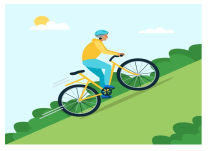
Answer: (c) The energy is stored as potential energy.
Identify the only correct statement.
Answer: (b) Pulling a rubber band stretches it by applying force
When a stone is thrown into the air, what happens to its kinetic energy as it rises higher?
Answer: (a) The kinetic energy decreases as the stone gains potential energy.
Which of the following is a second-class lever, where the load is between the effort and the fulcrum?
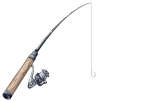
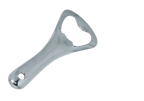
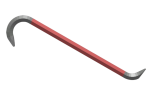

Answer: (b)
If a screw has less steep threads, what happens?
Answer: (b) Harder to turn, holds better
While walking on a slippery surface, you feel yourself slipping. Which force is making you slip, and how can you stop it?
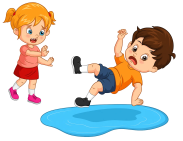
Answer: (d) Friction; By wearing shoes that grip better
Select the INCORRECT pair from below: 1. Pulley and Wedge – Speeding up the load movement 2. Inclined Plane and Pulley – Reducing the effort needed to lift 3. Lever and Screw – Decreasing the distance traveled 4. Wheel and Axle – Holding the object in one place
Answer: (d) Both 1 and 3
Which of the following scenarios demonstrates the transformation of potential energy into kinetic energy?
Answer: (c) A ball rolling down a ramp
An illustration shows two children racing toy cars down two different ramps — one steep and one gentle. Which statement BEST explains the difference?

Answer: (c) The steeper ramp allows the cars to convert potential energy to kinetic energy faster.
| Topic | Quiz |
|---|---|
| Plants | Quiz on Plants |
| Animals | Quiz on Animals |
| Birds | Quiz on Birds |
| Housing and Clothing | Quiz on Housing and Clothing |
| Transport and Communication | Quiz on Transport and Communication |
| Human Body | Quiz on Human Body |
| Earth and Universe | Quiz on Earth and Universe |
| Matter and Material | Quiz on Matter and Material |
| Light and Sound | Quiz on Light and Sound |
| Our Environment | Quiz on Our Environment |
| Food and Digestion | Quiz on Food and Digestion |
| Force, Work and Energy | Quiz on Force, Work and Energy |