Animals are multicellular eukaryotic organisms that form the biological kingdom Animalia. They are heterotrophic, meaning they depend on other organisms for nutrition. Animals exhibit diverse characteristics and are classified into vertebrates, which have a backbone, and invertebrates, which do not. Vertebrates include mammals, birds, reptiles, amphibians, and fish, while invertebrates include insects, molluscs, and worms. Animals have specialised organ systems for digestion, respiration, circulation, excretion, and reproduction. This Animal Quiz for Class 6 explores these classifications and organ systems in detail. They show varied adaptations to survive in different habitats like deserts, forests, grasslands, aquatic environments, and polar regions. Understanding animals helps students learn about biodiversity, food chains, animal behaviour, and adaptation. It also highlights the need for wildlife conservation. Take these 10 multiple-choice questions to assess your understanding of animals.
A sloth spends most of its life hanging upside down from trees in rainforests. It has long, curved claws, and its body is adapted to move slowly. Which of the following best explains how these adaptations help the sloth survive in its environment?
Answer: (a) The claws help it grip tree branches while moving slowly, avoiding predators.
Read the following statement and choose the correct option: Statement A: All animals can adapt quickly when their habitat changes. Statement B: Adaptations happen over many generations.
Answer: (c) Only Statement B is true
What would most likely happen if all the decomposers were removed from an ecosystem?
Answer: (b) Organic matter would pile up, and nutrients would not return to the soil.
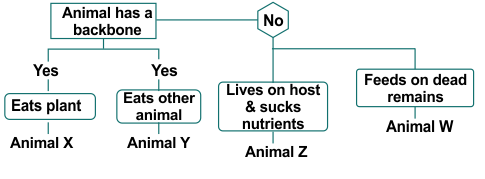
Look at the animal classification flowchart below and answer the question. Which of the following sets correctly identifies X, Y, Z, and W?
Answer: (a) X – Cow, Y – Tiger, Z – Leech, W – Earthworm
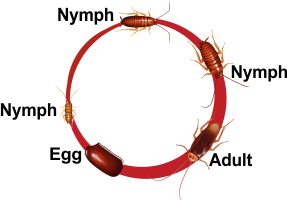
What is the primary difference between the life cycles of a cockroach and a butterfly?
Answer: (d) The cockroach goes through incomplete metamorphosis, while the butterfly goes through complete metamorphosis.
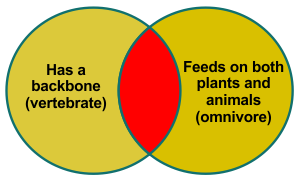
Which animal fits in the intersection of these two categories?
Answer: (d) Fox
The life cycle of a cockroach involves several stages. If the cockroach nymph is exposed to a chemical that inhibits its molting process, which of the following is most likely to happen?
Answer: (a) The nymph will never turn into an adult.
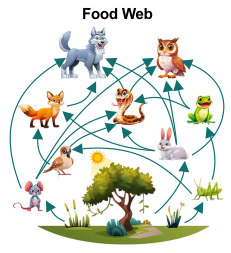
Which of the following statements is most accurate regarding the energy flow in this food web?
Answer: (c) The grasshopper is a primary consumer, and it receives energy directly from the grass, which is a producer.
A forest ranger noticed that after a fungus-killing spray was used, the number of earthworms and mushrooms dropped sharply. A few months later, the forest had a strong smell and rotting leaves everywhere. What is the most likely reason for the rotting smell and buildup of dead material?
Answer: (a) Decomposers are missing, so dead matter is not being broken down.
Which of the following best distinguishes camouflage from mimicry?
Answer: (b) Camouflage helps blend into surroundings; mimicry helps look like another animal.
| Topic | Quiz |
|---|---|
| Plants | Quiz on Plants |
| Animals | Quiz on Animals |
| Food and Clothing | Quiz on Food and Clothing |
| Natural Resources and Calamities | Quiz on Natural Resources and Calamities |
| Matter and Materials | Quiz on Matter and Materials |
| Force, Work and Energy | Quiz on Force, Work and Energy |
| Our Environment | Quiz on Our Environment |
| Earth and Universe | Quiz on Earth and Universe |
| Human Body and Health | Quiz on Human Body and Health |