Plants in the surroundings are the green living organisms we see everywhere, from our gardens to forests. They have roots, stems, leaves, and sometimes flowers and fruits. Plants make their own food using sunlight, water, and carbon dioxide. They also provide us with oxygen, food, shade, and raw materials. Learning about plants in the surroundings helps us understand their role in the environment. A quiz on plants for grade 3 is one of the ideal ways to test your knowledge about plants. Try these 10 questions to see how well you know plants in your surroundings.
Why is it important to conserve energy at home?
Answer: (a) To save money and reduce the waste of resources.
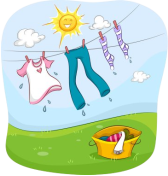
At which time of day are the Sun's rays the strongest, making it best for drying clothes outside?
Answer: (c) Midday when the sun is brightest
Maya's family is planning a picnic. Her father left the car engine running while loading the picnic items. Maya reminded him, "We should save fuel!" Why do you think Maya said this?
Answer: (b) To reduce the amount of fuel wasted
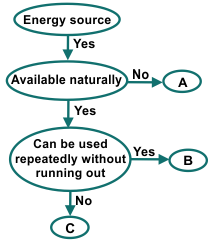
Study the flowchart and choose the correct option.
Answer: (d) A - Fuel cells, B - Sunlight, C - Coal
In a remote village, people rely on solar panels for electricity. One rainy week, they face power shortages. What is the best long-term solution?
Answer: (b) Store solar energy in batteries for use when sunlight is unavailable.
Consider the following statements and choose the correct option: Statement 1: Burning coal and oil can make the air dirty. Statement 2: Using solar power and wind energy helps keep the air clean.
Answer: (c) Both the statements are correct
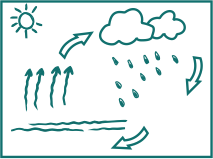
In the diagram below, water falls from the clouds to the ground as rain. Which process is shown in the diagram?
Answer: (c) Precipitation
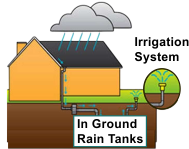
A farmer is facing a drought. He decides to install a rainwater harvesting system. What is the main benefit the farmer will get from this system?
Answer: (d) It helps the farmer collect and store rainwater for future use.
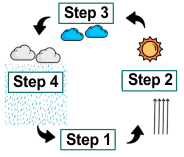
A child is playing outside on a sunny day, and they notice the air feels very warm. They also see the ground is dry, and there are no clouds in the sky. Which step of the water cycle is most likely happening less in this area?
Answer: (a) Step 4 - Precipitation
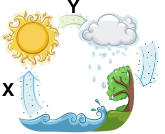
Refer to the given picture and identify the process represented by X and Y. How are these processes useful to the environment? A. They stop rivers from drying out B. They help in the formation of water vapour. C. They clean the air by removing dust particles. D. They help in the formation of clouds.
Answer: (d) B and D only
| Topic | Quiz |
|---|---|
| All About Animals | Quiz on All About Animals |
| Health and Hygiene | Quiz on Health and Hygiene |
| Human Body | Quiz on Human Body |
| Light | Quiz on Light |
| Forms of Matter | Quiz on Forms of Matter |
| Natural Resources-Sun and Water | Quiz on Natural Resources-Sun and Water |
| Plants in the Surroundings | Quiz on Plants in the Surroundings |
| Sound | Quiz on Sound |
| Properties of Water | Quiz on Properties of Water |