Light is a form of energy that helps us see things around us. The Sun is the main source of natural light. It travels in straight lines and can pass through transparent objects like glass. It cannot pass through opaque objects, which create shadows. Learning about light helps us understand how we see and how shadows are formed. This well-curated Light Quiz for grade 3 aims to test your knowledge regarding different sources of light, both natural and artificial. Answer these 10 questions to check how much you know about light and its properties.
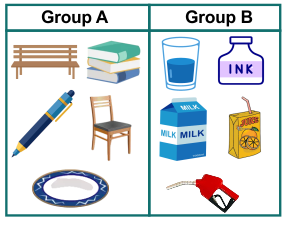
The table below shows how some materials are grouped. What are two possible headings for Groups A and B?
Answer: (c) Group A: Solids, Group B: Liquids
Choose the correct statement:
Answer: (d) A gas has particles that are spread out and move freely.
If you touch a metal spoon and a wooden spoon that have both been left in the same cool room, which one will feel colder?
Answer: (a) The metal spoon
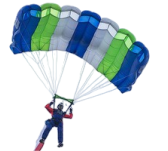
A scientist needs a material for making a parachute. Parachutes are used by skydivers to float down safely or by rescuers to save people. The material should be: 1. Light 2. Flexible 3. Strong enough to hold something up Which material should the scientist choose?
Answer: (d) Nylon fabric
A chef wraps hot food in aluminium foil to keep it warm. Why is aluminium foil used?
Answer: (a) It prevents heat from escaping.
Identify the incorrect match from the following options: A) Plastic Bottle – Rigid but can break B) Pencil – Hard and breaks under pressure C) Cotton Ball – Soft and can be squeezed D) Paper – Can be moulded into any shape E) Sponge – Soft but not compressible.
Answer: (d) D and E
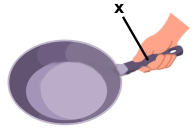
Refer to the given picture and identify the material used for the handle of a frying pan. Which material would be best to prevent heat from reaching the handle?
Answer: (b) Plastic
You are building a house and need to choose the best solid for windows. Which property of the solid is most important for this purpose?
Answer: (b) Transparency, to allow light through
Carefully read the given passage and answer the following questions. States of Matter and Their Changes Matter is anything that has mass and takes up space. It can exist in three main forms: solid, liquid, and gas. Solids have a fixed shape and volume, like ice or a rock. Liquids do not have a fixed shape but have a fixed volume, like water or juice. Gases do not have a fixed shape or volume and can spread out to fill any space, like the air we breathe. Each form of matter can change into another when heated or cooled. Understanding how matter changes helps us in many ways, like cooking, cleaning, and even understanding weather patterns. You are conducting an experiment with a balloon. You place the balloon filled with air in a cold room. After some time, you notice that the balloon gets smaller. what should you expect to happen if you take the balloon out of the cold room and place it in a warm room?
Answer: (c) The balloon will get bigger.
Carefully read the given passage and answer the following questions. Liquid vs. Gas Liquids and gases are two of the three common states of matter, with distinct properties that set them apart. Liquids, such as water, oil, and milk, have a fixed volume but can change shape to fit the container they are in. They flow easily and can be poured, and their particles are close together, but still able to move past one another. Gases, such as air, helium, and carbon dioxide, have neither a fixed shape nor a fixed volume. They expand to fill any space available and their particles are spread far apart, moving freely and quickly. Which of the following is the most accurate comparison of liquids and gases based on their properties?
Answer: (c) Liquids can change shape, but gases expand to fill any space.
| Topic | Quiz |
|---|---|
| All About Animals | Quiz on All About Animals |
| Health and Hygiene | Quiz on Health and Hygiene |
| Human Body | Quiz on Human Body |
| Light | Quiz on Light |
| Forms of Matter | Quiz on Forms of Matter |
| Natural Resources-Sun and Water | Quiz on Natural Resources-Sun and Water |
| Plants in the Surroundings | Quiz on Plants in the Surroundings |
| Sound | Quiz on Sound |
| Properties of Water | Quiz on Properties of Water |