
Comprehension is the ability to read and understand a passage or poem. Prose is normal writing with sentences and paragraphs, like stories. Poetry is creative writing that often has rhythm, rhyme, and deeper meaning. Boost literary understanding with this Class 3 Quiz on Comprehension covering both prose and poetry where reading comprehension helps students think, analyze, and answer questions based on what they read. It improves focus, vocabulary, and understanding of language. Strong comprehension skills are needed in all subjects. They also help in daily life when reading instructions, letters, or messages. Try these 10 MCQs based on short passages and poems to check how well you can understand and interpret what you read.RetryClaude can make mistakes. Please double-check responses.
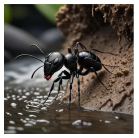
Read the passage and answer the following questions. The Helpful Little Ant One hot summer day, a tiny ant was walking near a river. She was very thirsty and wanted to drink some water. As she bent down to drink, she slipped and fell into the river. The ant could not swim and started to drown. She cried for help but her voice was too small for anyone to hear. A kind dove sitting on a tree branch saw the ant struggling in the water. The dove quickly picked a large leaf and dropped it near the ant. The ant climbed onto the leaf and floated safely to the shore. She was very grateful to the dove for saving her life. A few days later, the ant saw a hunter aiming his gun at the same dove. The ant knew she had to help her friend. She quickly crawled up the hunter's leg and bit him hard on his ankle. The hunter jumped in pain and his gun fired into the air. The loud noise scared the dove, and she flew away to safety. The dove and the ant became best friends. They learned that no act of kindness is ever too small, and helping others always comes back to you in wonderful ways. Question: How did the dove help the ant?
Answer: (c) By dropping a large leaf for her to climb on
Read the passage and answer the following questions: Most people know that honey is made by bees, but the way it’s made is quite fascinating. Honeybees collect nectar from flowers using their long, tube-like tongues. The nectar is stored in their 'honey stomach' — separate from their regular stomach — where enzymes begin breaking it down. Once back in the hive, the bee passes the nectar to another worker bee by regurgitating it. This process is repeated several times until the nectar becomes more concentrated. Then, the bees deposit the nectar into honeycomb cells and fan it with their wings to help water evaporate, making it thick and sticky. Once it reaches the right consistency, the cell is sealed with wax. Honey doesn’t spoil because of its low moisture content and natural acidity, which prevents bacteria and mold from growing. In fact, archaeologists have discovered pots of honey in ancient Egyptian tombs that are still perfectly edible after thousands of years! What do bees use to collect nectar from flowers?
Answer: (c) Their tongues
Read the passage and answer the following questions: Most people know that honey is made by bees, but the way it’s made is quite fascinating. Honeybees collect nectar from flowers using their long, tube-like tongues. The nectar is stored in their 'honey stomach' — separate from their regular stomach — where enzymes begin breaking it down. Once back in the hive, the bee passes the nectar to another worker bee by regurgitating it. This process is repeated several times until the nectar becomes more concentrated. Then, the bees deposit the nectar into honeycomb cells and fan it with their wings to help water evaporate, making it thick and sticky. Once it reaches the right consistency, the cell is sealed with wax. Honey doesn’t spoil because of its low moisture content and natural acidity, which prevents bacteria and mold from growing. In fact, archaeologists have discovered pots of honey in ancient Egyptian tombs that are still perfectly edible after thousands of years! What helps the nectar become thick and sticky?
Answer: (d) It is fanned by bees’ wings
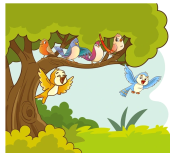
Read the passage and answer the following questions. The Singing Tree In the middle of a quiet forest lived an old banyan tree. This tree was special because it could sing beautiful songs. Every morning, the tree would wake up the forest with its sweet melodies. Birds would come from far away just to listen to the tree's wonderful voice. One day, a woodcutter came to the forest with his sharp axe. He wanted to cut down the singing tree to sell its wood. When the tree saw the woodcutter coming, it became very sad and stopped singing. The forest became silent and gloomy without the tree's happy songs. All the animals in the forest noticed the change. The rabbits stopped hopping, the squirrels stopped playing and even the flowers began to droop. A wise old owl flew to the woodcutter and said, "Sir, this tree brings joy to our entire forest. If you cut it down, our home will lose all its happiness." The woodcutter listened to the owl and looked around. He saw how sad all the creatures had become. He realised that some things are more valuable than money. He put away his axe and promised never to harm the singing tree. The tree was so grateful that it sang the most beautiful song ever heard, and the whole forest celebrated with joy. Questions: Who convinced the woodcutter not to cut the tree?
Answer: (d) A wise old owl
Read the poem and answer the following questions. The Little Raindrop I'm a tiny raindrop falling from the sky, Dancing with the wind as I go floating by. I water all the flowers and make them grow, I fill the rivers where the fishes flow. Children splash and play when I come down, I wash the dusty streets all around the town. I'm small but I'm important, can't you see? The whole world needs little drops like me. Questions: Where is the raindrop falling from?
Answer: (b) The sky
Read the poem and answer the following questions. The Little Raindrop I'm a tiny raindrop falling from the sky, Dancing with the wind as I go floating by. I water all the flowers and make them grow, I fill the rivers where the fishes flow. Children splash and play when I come down, I wash the dusty streets all around the town. I'm small but I'm important, can't you see? The whole world needs little drops like me. Questions: What does the raindrop do for flowers?
Answer: (d) Waters them and makes them grow
Read the poem and answer the following questions. My Grandfather's Hands My grandfather's hands are old and wise, They've seen many years go by. Wrinkled like the bark of trees, But gentle as a summer breeze. These hands have fixed a thousand things, Built swings with ropes and strings. They've held me when I was small, And caught me when I used to fall. Questions: What are the hands compared to in the poem?

Answer: (a) Bark of trees and summer breeze
Read the poem and answer the following questions. The Busy Bee Buzz, buzz, buzz goes the little bee, Flying from flower to tree. Working hard throughout the day, Making honey in her special way. She visits roses red and bright, From early morning until night. Teaching us to work with care, And always be willing to share. Question: What color roses does the bee visit?
Answer: (c) Red and bright
Read the poem and answer the following questions. The Moon's Lullaby The moon shines bright in the dark night sky, Singing a lullaby as stars go by. She watches over children while they sleep, Her gentle light makes slumber deep. When babies cry, she softly glows, To calm their fears before they doze. A silver guardian in the night, Keeping everyone safe until morning light. Question: When does the moon shine in this poem?
Answer: (b) In the dark night sky
Read the poem and answer the following questions. The Moon's Lullaby The moon shines bright in the dark night sky, Singing a lullaby as stars go by. She watches over children while they sleep, Her gentle light makes slumber deep. When babies cry, she softly glows, To calm their fears before they doze. A silver guardian in the night, Keeping everyone safe until morning light. Question: What does the moon do for children?
Answer: (a) She watches over them while they sleep